
Indian investors have seen their wealth erode by a staggering Rs 16.77 lakh crore over four trading sessions, as the markets faced deep losses driven by elevated crude oil prices, geopolitical tensions, persistent foreign fund outflows, and a record-low rupee.

Petrol and diesel prices have been increased by Rs 3 per litre each, marking the first hike in over four years, as state-run fuel retailers pass on some of the impact from surging global crude prices, which have been exacerbated by the Iran war.

S&P Global Ratings warns that a sustained rise in crude oil prices to $130 per barrel could significantly slow India's economic growth, weaken fiscal metrics, and strain corporate and banking sector performance, potentially reducing growth by up to 80 basis points.
Indian benchmark indices Sensex and Nifty experienced declines due to a sharp rally in crude oil prices, continuous foreign fund outflows, and geopolitical uncertainties. Regulatory developments in the banking sector, particularly the implementation of the Expected Credit Loss (ECL) framework, also contributed to the selling pressure.

The global artificial intelligence (AI) boom has significantly reshaped equity markets, with Taiwan surpassing India to become the world's fifth-largest stock market. India has seen its market capitalisation decline by 7% year-to-date, while AI-linked economies like Taiwan and South Korea have surged.
The Supreme Court is reviewing a plea challenging the 2025 SHANTI Act, which caps liability at Rs 3,000 crore for nuclear plant incidents, raising concerns about victim compensation and operator accountability.

If one has to compare the tenures of the two prime ministers one must credit Nehru with laying the foundations on which Modi is building a grand edifice, asserts Colonel Anil A Athale (retd).

The Indian government has issued a stern warning to industrial users who are reportedly procuring cheaper retail fuel instead of industrial-grade fuel, leading to significant losses for state-run oil marketing companies (OMCs) and potential local shortages. This diversion, driven by a substantial price difference between retail and bulk diesel, is adversely impacting OMCs, which are absorbing daily losses of approximately 550 crore to keep retail prices stable.

Andhra Pradesh is spearheading an ambitious initiative to establish a fully integrated beach sand minerals, rare earth, and titanium ecosystem, aiming to attract over 50,000 crore in investments over the next decade. This move is part of India's broader strategy to reduce its reliance on China for strategic minerals and permanent magnets, with the state preparing a comprehensive rare earth policy and planning specialised industrial clusters.

A US-sanctioned tanker carrying Iranian crude oil is heading to India, marking the resumption of oil imports from Iran after seven years.
Escalating geopolitical tensions in West Asia are beginning to disrupt India's automotive supply chain, leading to rising commodity prices, logistics bottlenecks, material shortages, and pressure on consumer demand, with two-wheeler makers already raising prices.

Companies in the fast-moving consumer goods (FMCG) sector are losing favour with equity investors, with their price-to-earnings (P/E) ratio declining to its lowest level in six years, now trading at 38.8 times trailing earnings.

Russia's First Deputy Prime Minister Denis Manturov met with Indian leaders to discuss strengthening bilateral ties in key sectors amidst the escalating conflict in West Asia.
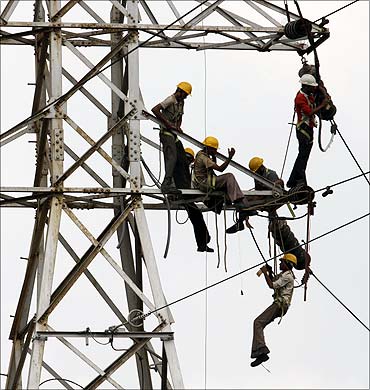
The Narendra Modi government plans to pump around Rs 12.61 lakh crore into the economy over seven years.

The increase by more than three per cent is largely due to jump in the rate of inflation in the case of WPI for fuel, power, light and lubricants

Aviation fuel prices for domestic airlines remain unchanged, providing stability for local carriers, while commercial LPG and 5-kg cylinders see a significant rate hike due to rising international energy costs.

The Punjab government has redistributed portfolios held by arrested minister Sanjeev Arora among other cabinet members, including Aman Arora, Harjot Singh Bains, and Tarunpreet Singh Sond.

A NITI Aayog report indicates that India's digital public infrastructure (DPI) initiatives could contribute 4 per cent of the GDP by 2030, a significant increase from the current 1 per cent.

'In all these years of rupee depreciation, of rising oil prices, of inflation caused by import dependence, not one leader had the courage to look the people in the eye and say: Please do this for your country.'

The Beijing summit may have reduced immediate diplomatic uncertainty, but it did not resolve the deeper structural contest between the United States and China. That contest appears likely to define the coming decade, notes Varun Arya.

High energy costs, long a drag on India's manufacturing competitiveness, are finally easing. Power and fuel expenses accounted for 1.98 per cent of net sales in 2024-25, the lowest level in data compiled by the Centre for Monitoring Indian Economy (CMIE) over the past two decades.

The Indian government's decision to ban sugar exports until September 30 has drawn sharp criticism from the sugar industry and farmer leaders, who fear long-term negative impacts despite the stated aim of controlling domestic prices and ensuring availability.

NIT Rourkela has announced the launch of four new academic programmes for the 2026-27 session, focusing on emerging technologies such as semiconductors, artificial intelligence, and quantum technologies.
India's largest private refiner, Reliance Industries Ltd, successfully navigated a volatile energy market in the last quarter of FY26 by diversifying crude sourcing and demonstrating operational agility, particularly in response to geopolitical disruptions and cost fluctuations.

Prime Minister Narendra Modi addressed an NDA rally, assuring that the Indian government is providing assistance to Indian citizens stranded in West Asia due to the ongoing conflict. He criticised the Congress party for allegedly making provocative statements and spreading rumours regarding the crisis.

Petrol and diesel prices in India have been increased by Rs 3 per litre each, marking the first rate hike in over four years. This decision follows a period of stable prices during recent state elections, despite rising global crude oil prices and significant losses for fuel retailers.

Kerala, Tamil Nadu and West Bengal have been fiscally stressed for a considerable period of time, and there are no easy ways to mobilise revenues to meet the cost of the promised freebies, particularly in the prevailing difficult economic scenario, points out M Govinda Rao.

Adani Group Director Jeet Adani and Bharti Enterprises Vice Chairman Rakesh Bharti Mittal highlighted the importance of infrastructure, energy, and connectivity in shaping India's AI ecosystem, emphasising Visakhapatnam's potential as a major digital gateway.
. Going forward, if the government interference continues, oil-marketing companies will be at a disadvantage. \n\n

India's first trillion-dollar company will be built on technology it owns, not just operates, predicts Ajay Kumar.

Hiring demand strongest in ecommerce, tech startups, healthcare, and energy sectors, with Bengaluru, Hyderabad, and Pune leading.

India's home-grown EV startups say the government's auto PLI scheme is helping big players while shutting out innovators building electric two- and three-wheelers from scratch.

Indian benchmark equity indices, Sensex and Nifty, saw gains in early trade, driven by strong performance in banking shares and positive sentiment from Asian markets, alongside optimism surrounding the ongoing US-China Summit.

'Markets never fully lose hope. But an important shift could come if the Strait remains closed -- moving from high prices to no prices.'

Amidst a sharp run-up in gold and silver prices, investors are advised to rebalance their portfolios by booking partial profits in precious metals and reallocating to domestic equities and debt, according to financial experts.

India's retail inflation, measured by the Consumer Price Index (CPI), increased to 3.48 per cent in April, up from 3.40 per cent in March, primarily due to a surge in prices of gold and silver jewellery, as well as certain kitchen staples like tomatoes and cauliflower.

Reliance Industries' digital arm, Jio Platforms, may see its initial public offering (IPO) delayed to the second half of fiscal 2027, according to CreditSights. The delay is primarily attributed to ongoing geopolitical tensions in the Middle East, which could impact market conditions and investor sentiment.

India's fiscal deficit is projected to reach 4.5 per cent of GDP for the current fiscal year, exceeding the budgeted target, as the government's policy responses to the West Asia conflict are expected to strain public finances, according to research firm BMI.
TEXMiN Foundation, IIT (ISM) Dhanbad has signed an agreement with the University of Pretoria, South Africa, for research collaboration in critical minerals, rare earth element processing, recycling, extraction technologies and advanced mining innovation.

Gautam Adani, Chairman of the Adani Group, has surpassed Mukesh Ambani to become Asia's richest person, with a net worth of USD 92.6 billion, placing him 19th globally according to the Bloomberg Billionaires Index.
